Leafy mistletoe is common in Oregon white oaks around Grants Pass. It seldom kills a healthy oak, but heavy clumps slow growth, add drought stress and load limbs that can snap in storms. A tree service controls it by cutting infected branches at least a foot below each clump. Dial (541) 291-5564 to speak with a licensed company, and check before it visits that a look at your oaks costs nothing.
What oak mistletoe is
The leafy green clumps in local oaks are oak mistletoe, a plant that lives on the tree's branches and draws water and minerals from them. The Pacific Northwest Plant Disease Management Handbook identifies it as Phoradendron villosum.
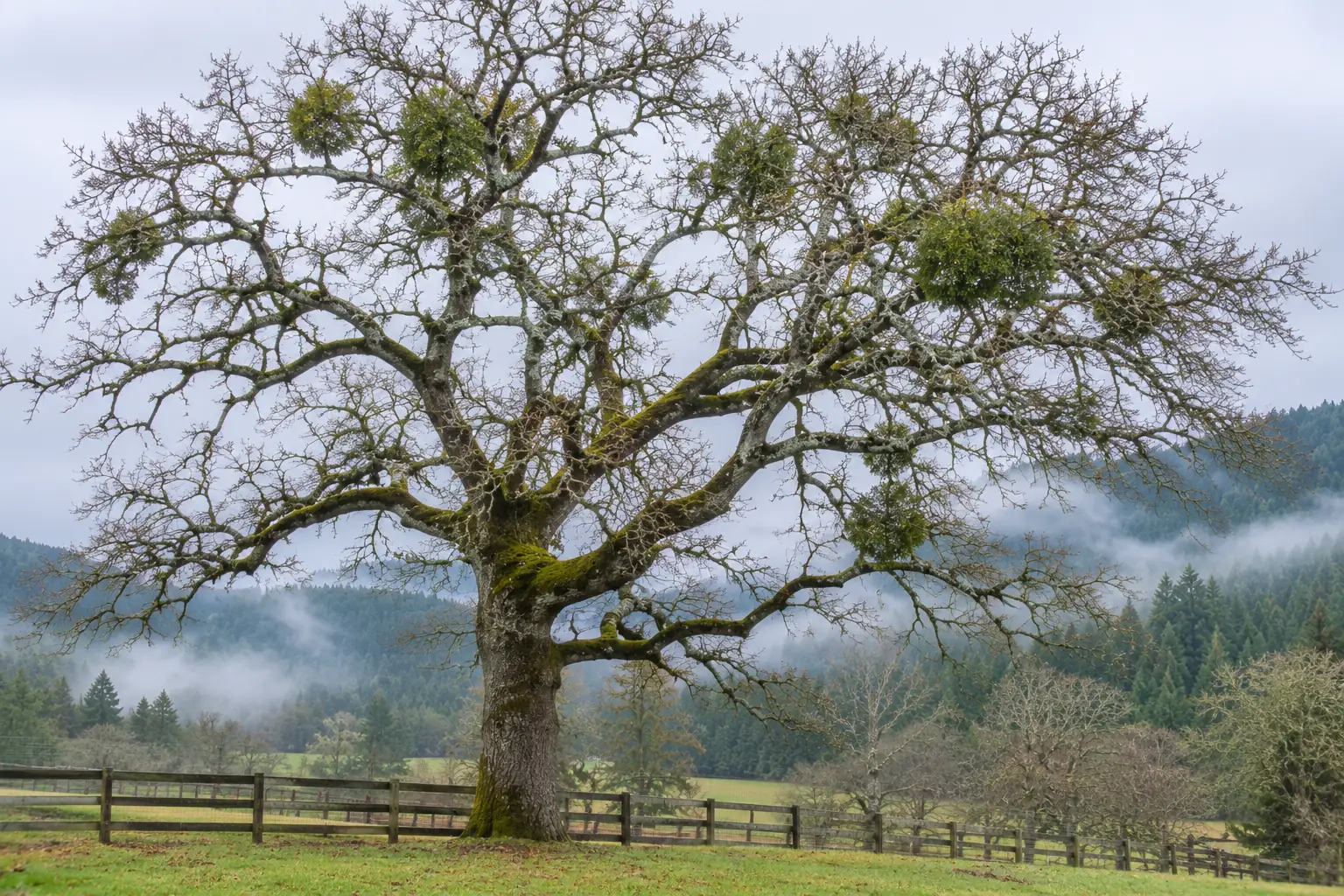
The handbook lists Oregon white oak and black oak among its hosts, with occasional infections on other hardwoods such as alder, manzanita, walnut and willow. It does not grow on conifers. The clumps have forked green stems and somewhat hairy leaves, and they bear shiny whitish berries late in the year. Because the leaves are green, oak mistletoe makes some of its own food, so Oregon State University Extension calls it a hemiparasite in its publication Mistletoes: Effects on Trees Vary by Type, published November 2021 and reviewed in 2026.
Birds spread it. Robins, jays and other birds eat the berries, and the sticky seeds stick to branches after passing through them. That is why mistletoe tends to build up in trees where birds feed and roost, and why one heavily infected oak often has infected neighbors. White oaks lose their leaves in fall, so winter is when the clumps are easiest to spot and count.
How much harm mistletoe does
A few clumps in a big oak are mostly a cosmetic issue. A heavy load is a different story, especially in a dry summer.
OSU Extension says true mistletoe damage is usually minor, but heavily infected trees can show growth loss, branch dieback and drought stress. The plant disease handbook adds that heavily infected trees grow more slowly, may be more open to insect attack and may die during drought. It also notes that swellings form where mistletoe attaches, and that branches carrying heavy clumps can break in storms. In a yard, that last point matters most when the limb hangs over a roof, a driveway or a play area.
Mistletoe also has value. The handbook says the berries are an important late fall and winter food for the western bluebird and other wildlife, and that more kinds of birds are linked to Oregon white oaks with heavy mistletoe. On open pasture oaks far from buildings, many owners leave some of it.
How a tree service removes oak mistletoe
The only lasting fix is to cut out the infected wood, not just the green clump. The plant grows root-like strands into the branch, so shoots grow back from what stays behind.
- Cut the branch, not the clump. University of California IPM's mistletoe pest note, updated March 2022, advises removing infected branches at least 1 foot below where the mistletoe attaches.
- Do the work in the dormant season. The same note says removing mistletoe each winter cuts its spread, since a plant must be several years old before it makes seed. Bare white oaks make the clumps easy to find in winter.
- Treat clumps on the trunk or a main limb differently. Where a branch cannot be removed, the pest note describes cutting the mistletoe flush and wrapping the spot in black plastic for up to two years to block light.
- Plan on follow-up visits. OSU Extension says pruning offers a few years of relief, not a permanent cure, and the handbook says removal may need to be repeated several years later.
- Keep the crown in balance. Removing many infected limbs at once can strip too much of the tree. On a Grants Pass street tree, the city's permit rules cap homeowner pruning at 25% of the tree's structure, and topping is not allowed.
The pest note also mentions a growth regulator called ethephon, applied as the label directs, but it calls the control temporary and says it should be done by experienced professionals. Ask the company whether it offers this and how long the effect usually lasts.
On a badly infected oak, a company may suggest removing the worst limbs over two or three winters. If heavy clumps sit on big limbs over a house, a hazard check can sort out which are urgent. See hazard tree checks in Grants Pass and oak tree care.
Dwarf mistletoe in pines and firs
Conifers get a different kind of mistletoe. Dwarf mistletoes are small plants with tiny scalelike leaves on yellow, brown, purple or olive shoots, and OSU Extension says they grow only on conifers and usually infect just one species or close relatives.
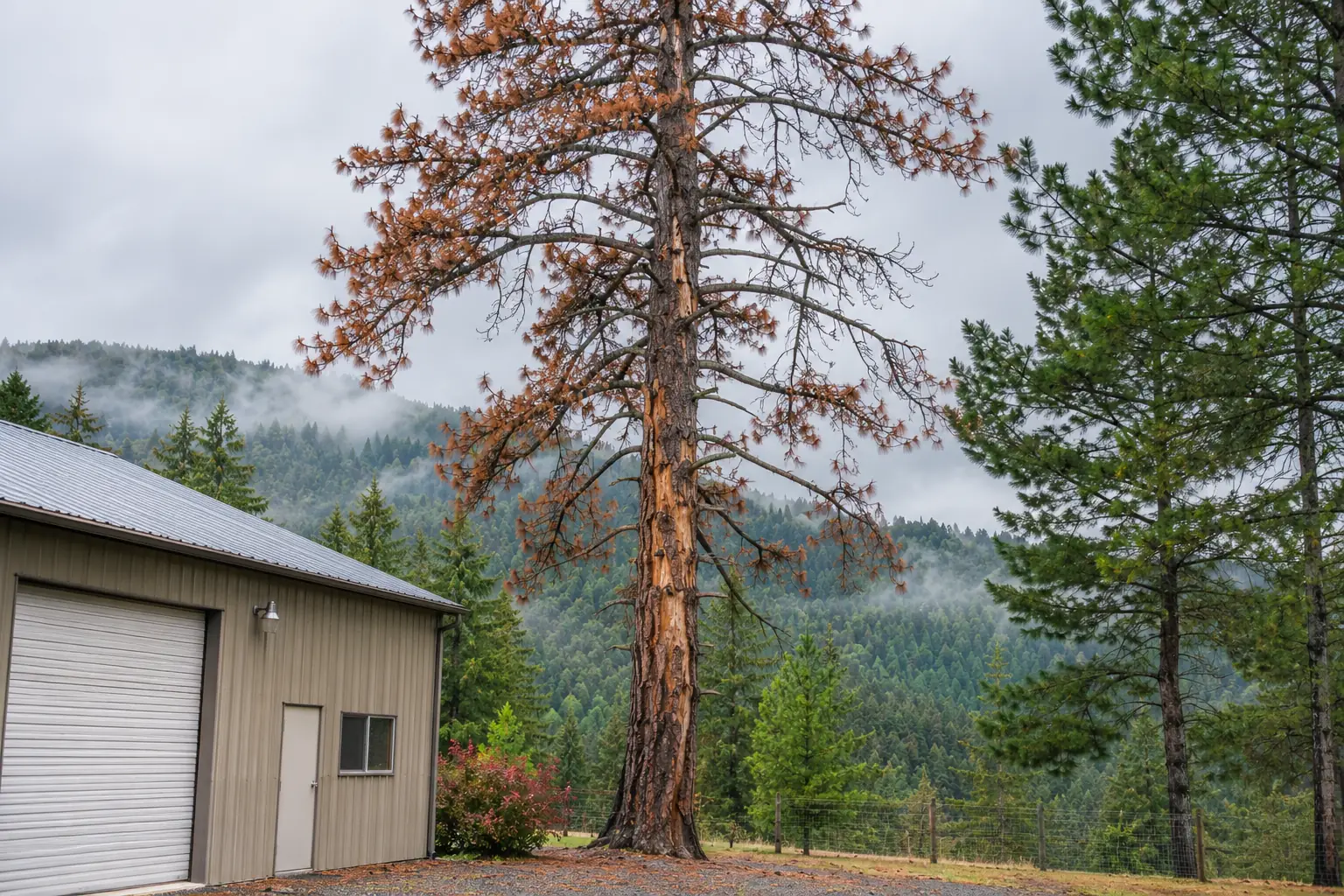
The OSU publication lists ponderosa pine and true firs among their hosts in western Oregon. Signs include witches' brooms, which are dense clusters of twigs on one branch, plus swellings on the trunk or limbs and cankers. Effects range from slower growth and twisted form to dead tops, death and a higher chance of bark beetle attack. Dwarf mistletoe spreads when seeds shoot from infected trees in the overstory onto the trees below. OSU's suggested approach is to remove younger trees of the same species growing within about 50 feet of an infected overstory tree, favor other species, and understand that the infection ends when the infected overstory trees die or are removed. On acreage, this often becomes part of thinning or fire-safety work, covered in the defensible space guide.
Other reasons an oak looks sick
Mistletoe is only one of several things that can make an oak look poor. The Oregon Department of Forestry's Oak pests fact sheet, dated September 2023, says most insects on oaks cause only surface damage or attack trees that are already dying.
| What you see | Likely cause | How serious |
|---|---|---|
| Small scattered patches of dead leaves, lumps on twigs | Gall wasps and flies, often with squirrels digging out the grubs | Mostly cosmetic, per ODF |
| Yellow mottled leaves, tiny insects and black specks underneath | Oak lace bug | Usually only looks bad, and ODF says treatment is not needed |
| Brown, skeletonized leaves across the whole crown | Oak looper caterpillars | Outbreaks are short, and the tree leafs out again the next year |
| Weak or broken limbs starting at crotches or old wounds | Carpenterworm larvae | Can weaken branches over repeated years |
| Whole sections of crown dying, pale boring dust at the base, 1/16-inch holes | Possible Mediterranean oak borer | Serious, so report it |
| Trees dying over several years in a slowly growing patch | Possible root disease | Have it diagnosed |
| An oak thinning under taller firs | Shade from conifers | Can kill the oak over time |
ODF calls the Mediterranean oak borer an invasive beetle that carries a fungus able to kill oaks. Its May 2026 tree health bulletin reported detections in Clackamas, Marion, Multnomah, Polk, Washington and Yamhill counties and new trapping in counties where it had not been found. If you see the symptoms in the table, report them to the Oregon Invasive Species Hotline, as the fact sheet asks. OSU Extension's Why are my trees dying?, revised July 2025, is the source for the slowly spreading pattern that points to root disease.
ODF's Oregon white oak profile explains the last row. Oregon white oak can grow in its own shade, but it dies once Douglas fir overtops it, and without regular fire, firs have moved in on many oaks. Removing or thinning the firs crowding an oak, often called releasing the oak, is a common tree service job on rural lots around Grants Pass, Merlin and Wilderville.
Habits that weaken oaks
Some of the most common oak problems start with changes people make around the tree. The ODF fact sheet names two to avoid.
First, avoid construction within twice the height of the tree. Trenching, grading and heavy equipment over the roots all add stress an older oak may not recover from quickly. Second, avoid changing the watering an established oak has grown used to, whether that means adding a new lawn sprinkler under it or shutting off one that has run for years. ODF's October 2024 fact sheet Watering your trees ranks Oregon white oak among the most drought-tolerant trees in the state, warns against overwatering oaks and pines, and says to phase out extra water gradually instead of stopping all at once.
Sudden oak death is a coastal problem so far
Sudden oak death is a different disease, and it mainly kills tanoak. ODF's May 2026 tree health bulletin reported 51 new infected sites found the year before in Curry County, between the Rogue River and Port Orford, and an emergency quarantine area that had grown to 289 square miles. The sources reviewed for this guide did not report it in Josephine County. If tanoaks on your land die suddenly, contact ODF.
What a tree service does on an oak job
Most oak work is pruning, not removal, and each task should be priced on its own.
- Cutting out mistletoe-infected branches and deadwood.
- Reducing heavy limbs over roofs and driveways without topping the tree.
- Removing or thinning firs that are crowding the oak.
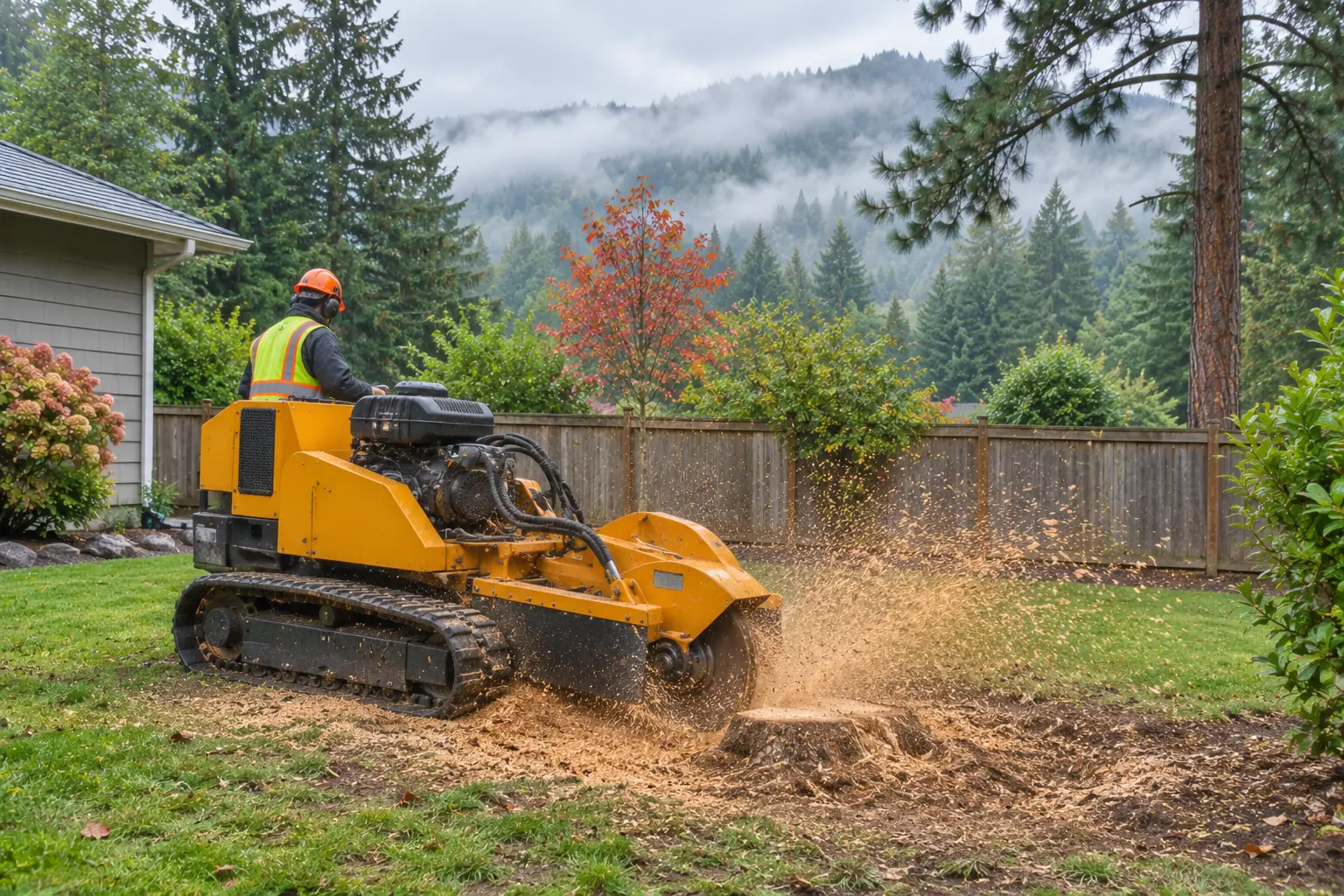
- Taking down an oak that is dead or unsafe, with stump grinding if you want it. See tree removal in Grants Pass.
For a diagnosis, ask whether an ISA Certified Arborist will look at the tree. That credential means the person passed the International Society of Arboriculture's exam and keeps up continuing education, and you can confirm it through the ISA's arborist search. For help identifying a pest before you hire anyone, the OSU Extension office in Josephine County answers at 541-241-3050. Work on an oak in a Grants Pass planting strip also needs a city permit, explained in the Grants Pass tree permits guide. For how a referral call works, start at the Tree Service Grants Pass home page.
Frequently asked questions
Will mistletoe kill my oak tree?
Rarely on its own. OSU Extension says the damage is usually minor, but a heavy load adds drought stress and slows growth, and a weak tree may die in a severe drought. Heavily loaded branches are also more likely to break in storms.
Can I just pull the mistletoe off the branch?
Pulling or cutting off the green clump only buys time. The plant grows into the branch and resprouts. University of California IPM advises cutting the infected branch at least 1 foot below the point where the mistletoe attaches.
When is the best time to remove mistletoe from oaks?
Late fall through winter works well. Oregon white oaks are bare then, so the evergreen clumps are easy to see, and removing them each winter slows spread before the plants set more seed.
Is the mistletoe in my pine trees the same as in my oaks?
No. Pines and firs get dwarf mistletoe, a different plant that only grows on conifers and causes brooms, swellings and dead tops. It spreads from taller infected trees to the ones below, so the fix usually involves removing infected trees of the same species nearby.
Why is my oak dying back after we put in a lawn?
Changing an oak's water is one of the things ODF says to avoid, and new digging near the roots adds stress. A new summer watering schedule can harm an oak that grew up without one. Have the tree looked at, and ask about pulling turf and sprinklers back from the trunk.