Tree removal in Grants Pass is the job of cutting a tree down safely, in one piece or in sections, and clearing the wood. Dial (541) 291-5564 and the job is referred to one independent tree service near Grants Pass that holds an Oregon CCB license. The company should size up the tree and check for wires and permits. Removal estimates mostly cost nothing, yet the company decides, so settle that question when you phone and see the number written down.
Remove it, or keep it with care
Before you pay for a removal, make sure the tree really has to go. Many trees that look bad can be kept with pruning, and some that look fine are failing inside.
Removal is usually the right call when the tree is dead, when a large part of the trunk or root plate is decayed, when it leans toward a house after a recent shift in the soil, or when it sits where you need to build. It is often the wrong call when the only complaint is leaves in the gutter or a branch over the roof, since tree trimming fixes those for less money. If you are not sure, ask for a hazard tree check first. An inspection costs far less than a removal.
Three ways a tree comes down
How a tree service removes a tree depends on how much open ground surrounds it. The method drives the crew size, the equipment and most of the price.
| Method | When a crew uses it | What you will see |
|---|---|---|
| Felling in one piece | Open ground at least as long as the tree is tall, with nothing in the fall path | A notch cut, a back cut, and the tree tipped where the notch points |
| Sectional takedown | Houses, fences, sheds or wires close by | A climber or lift works down the tree, roping limbs and trunk pieces to the ground |
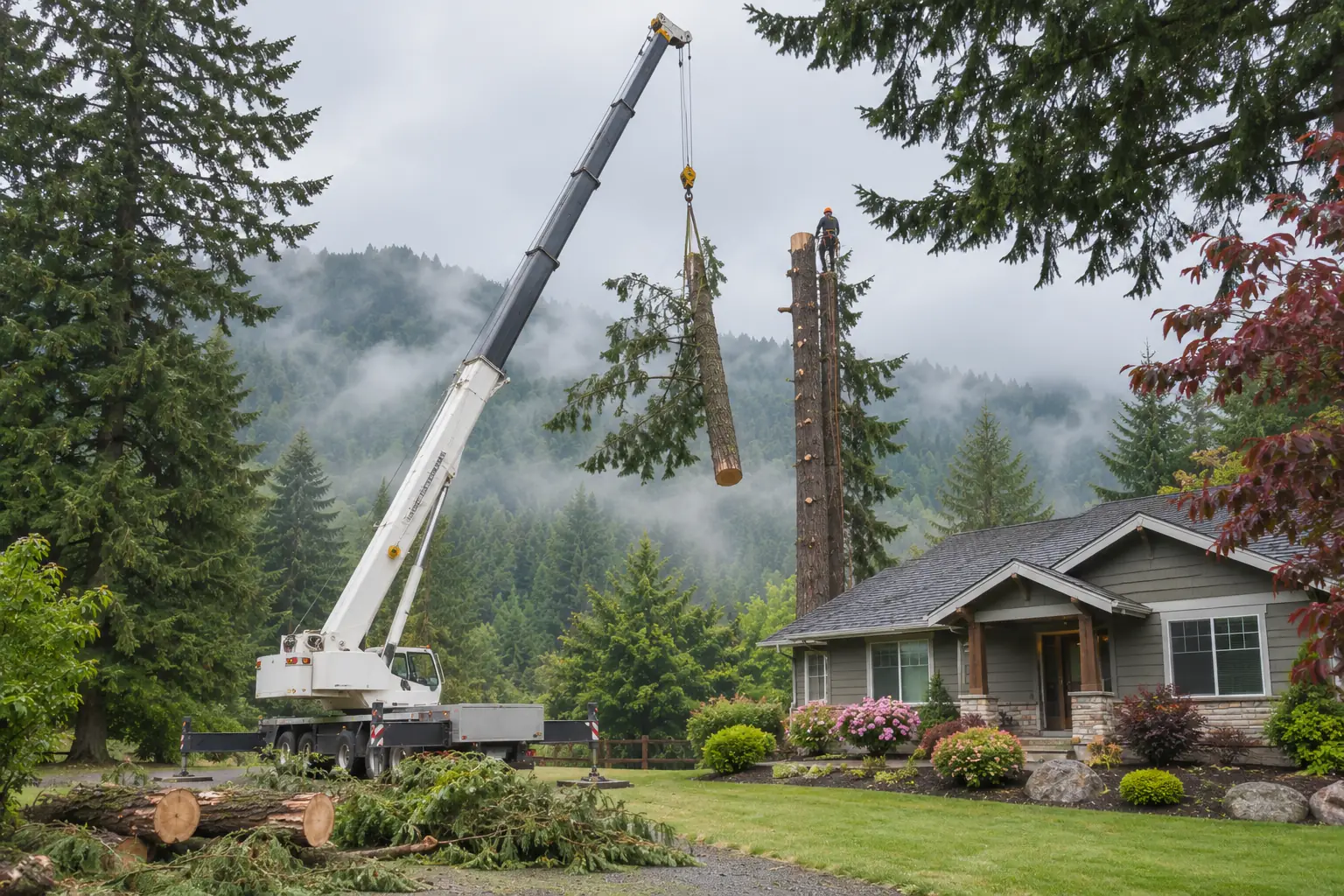
| Crane removal | Big trees over a roof, or trees too weak to climb | The crane holds each piece before it is cut and sets it in the yard or on a truck |
Douglas-fir and ponderosa pine are two of the main conifers in southwest Oregon, as OSU Extension's Trees on the Edge describes, and a tall conifer beside a house is a typical crane job. A crane costs more per hour but can cut the time on site and keep heavy wood off your roof. Ask the company which method it plans and why.
Before the saw starts: permit checks
Most trees fully inside a private yard in Grants Pass can be removed without a city permit, but there are four places where the rules change. Check each one before you schedule the work.
- Street trees. A tree in the planting strip or other public right-of-way needs a free city tree permit, and the city's tree permit page says a city-prequalified arborist with International Society of Arboriculture certification must apply and do the removal. The permit application says removed trees must be replaced within four months, or by a date agreed in writing, with a tree at least 1.75 inches in caliper from the city's approved list. It also says the city may deny removal of a street tree that is not hazardous.
- Heritage trees. The city's tree code (Title 10) protects trees the City Council has named Heritage Trees, on public or private land, and removal needs a city permit with mitigation. Ask the city at 541-450-6000 if you think your tree might be on that list.
- Creeks and wetlands. The city's Development Code Article 24 keeps a 20-foot stream corridor setback for riparian vegetation, allowing trimming to contain plants within the banks or to fix a hazard. In conservation class wetlands, removing a tree more than 8 inches in diameter needs prior approval from the city's director.
- County roads. Outside the city, Josephine County Public Works issues a special permit for temporary use of a county road right-of-way, including vegetation removal. Call 541-474-5221 if a tree sits along a county road.
The Grants Pass tree permits guide goes into each of these in more detail.
What tree removal costs
Removal prices range widely because height, trunk size, access and the cleanup you choose all change the work. National cost guides give a starting point, not a quote.
LawnStarter's tree removal cost guide, updated October 5, 2026, says removal typically runs $385 to $1,070, or about $10 to $14 per foot of height, with a national average of $630. This Old House's tree removal cost page, updated March 5, 2026, gives these ranges by size:
| Tree height | National range |
|---|---|
| 30 feet or less | $150 to $450 |
| 30 to 60 feet | $450 to $1,200 |
| 60 to 80 feet | $800 to $1,500 |
| 80 feet or more | $1,000 to $2,000 |
A tall fir that needs a crane, a tree hanging over a roof, or a lot you cannot drive onto can push a bill well past those numbers. Stump grinding is often priced separately, and This Old House notes that removal does not always include the stump. The company's written estimate is the price that counts. The tree service cost guide lists ways to keep the total down, such as keeping the firewood or skipping the haul-away.
Fire season and saw hours
From late spring into fall, state fire rules decide when a removal can happen on and near forestland. That matters on many rural lots outside town.
The Oregon Department of Forestry's 2026 regulated closure for southwest Oregon took effect May 15, 2026. It banned power saws during extreme fire danger and limited them to before 1 p.m. and after 8 p.m. at moderate danger, and before 10 a.m. and after 8 p.m. at high danger. Every saw needed a shovel, an extinguisher of at least eight ounces, and a one-hour fire watch after use. Josephine County's burn page listed the 2026 fire season as ending October 28, 2026. For the current level, call the ODF Grants Pass Unit at 541-474-3152. A removal planned for winter avoids all of this.
What happens on removal day
Knowing the order of work helps you prepare the yard and spot problems early. A typical removal runs like this.
- The crew sets up cones or a work zone and checks the wires again.
- Limbs come off first, either cut free over open ground or lowered on ropes.
- The trunk comes down in one piece or in rounds, depending on space.
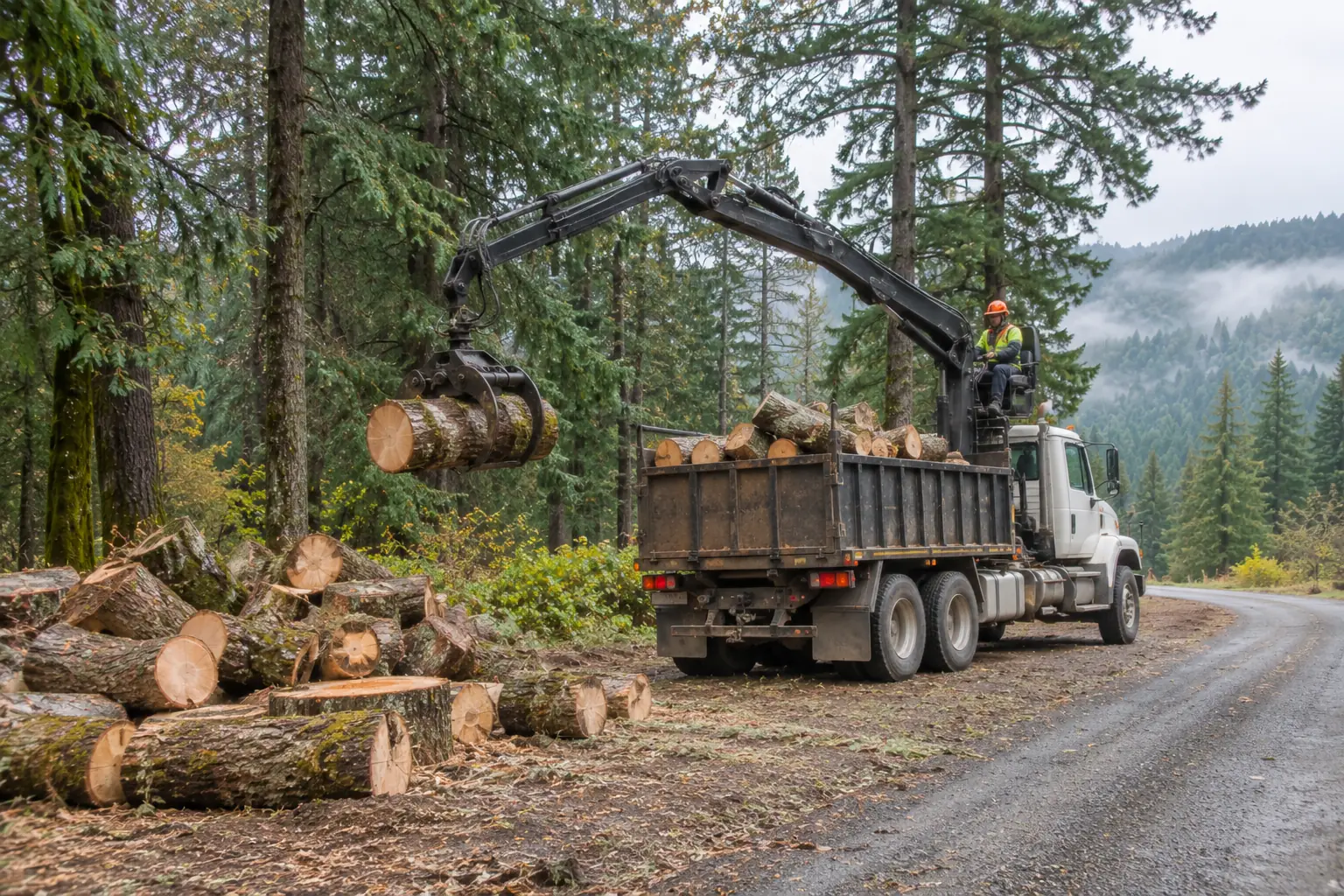
- Brush goes through a chipper, and the wood is cut to the length you agreed on.
- The crew rakes, blows off hard surfaces and walks the site with you.
Move cars, patio furniture and potted plants before the crew arrives. Tell them about septic tanks, sprinkler lines and soft ground, since trucks and cranes are heavy. If you want the wood for firewood, say so at the estimate so the crew leaves rounds instead of hauling them.
Questions to ask before you sign
A clear written estimate protects both sides. Ask these questions and get the answers in writing.
- What is your Oregon CCB license number? Check it on the CCB license search or call the CCB at 503-378-4621.
- Can I see your liability insurance certificate? The CCB's license page explains the bond and insurance a licensed contractor carries.
- Which method will you use, and will you need a crane or a lift?
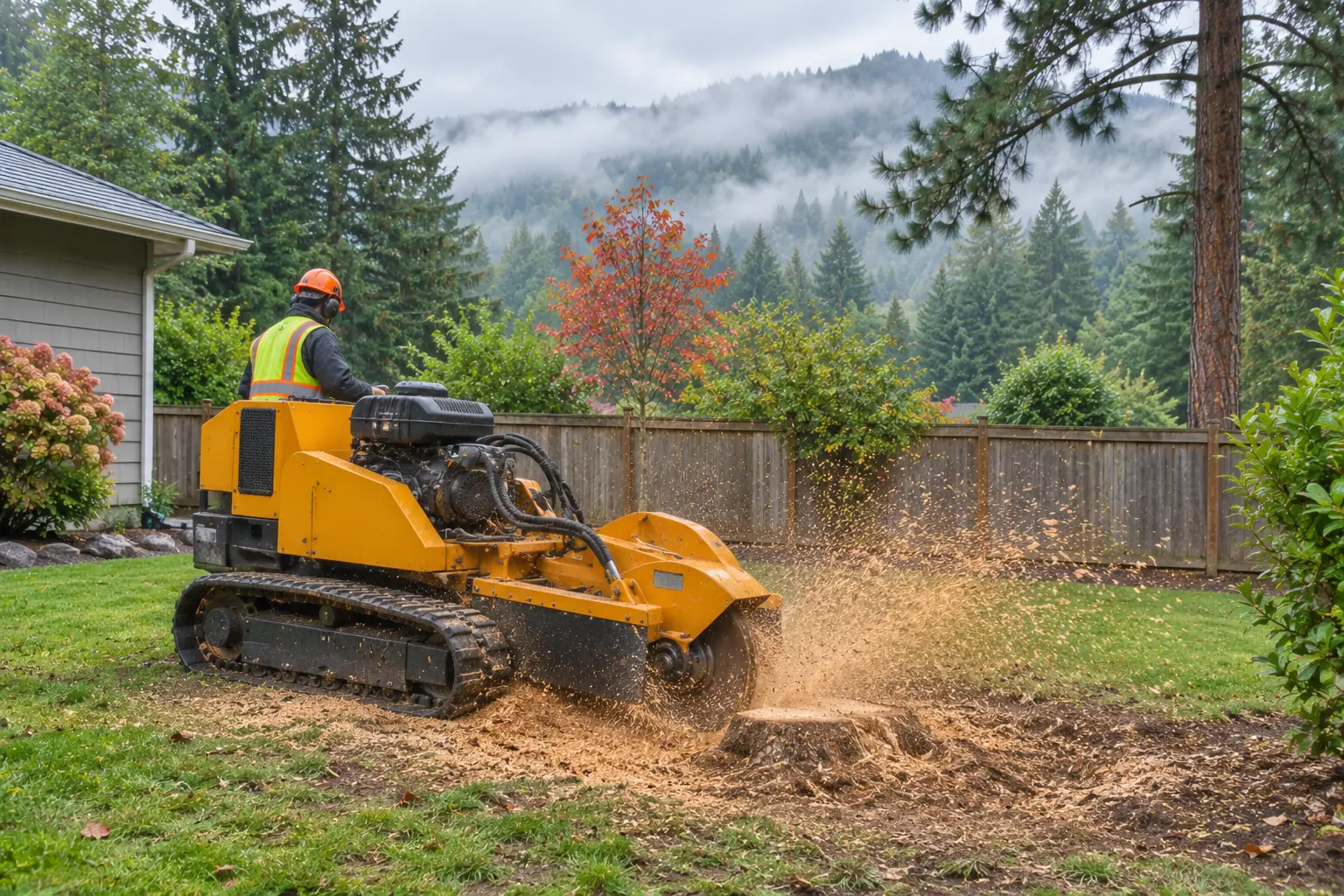
- Is the stump included, and how low will it be cut?
- What happens to the wood, the chips and the brush?
- Who files the permit if the tree is in the right-of-way?
- What is the date range for the work, and what if the weather or fire danger changes?
The Oregon Landscape Contractors Board says either a CCB or an LCB license allows a company to remove trees and grind stumps. This referral service connects callers with a company that holds a CCB license.
Tree removal near Grants Pass
The same free call works for removals in town and on rural acreage around Grants Pass. Out-of-town jobs often involve longer drives for equipment, steep driveways and bigger conifers.
Town pages cover Merlin, Murphy, Cave Junction and Selma. If the tree is down already or hanging over something, go to the storm and emergency page. When the trunk is gone, stump grinding finishes the job. Start at the Tree Service Grants Pass home page to see how the referral works.
Frequently asked questions
Do I need a permit to take down a tree in my own backyard?
For most trees wholly inside a private yard in Grants Pass, no city tree permit is needed. Exceptions include street trees in the right-of-way, designated Heritage Trees, and trees in stream setbacks or wetlands. Call the city at 541-450-6000 if you are unsure.
Can a tree service drop a tall tree in one piece in my yard?
Only if there is open ground at least as long as the tree is tall and nothing in the way. Most trees near houses in town come down in sections instead, which takes longer but keeps heavy wood off the roof and fence.
Does removal include grinding the stump?
Not always. Many companies price the stump separately. Ask whether the estimate covers grinding and how deep, or whether the stump will just be cut low.
Who owns the wood after the tree comes down?
You do, unless you agree otherwise. Many homeowners keep the rounds for firewood, which can lower the price. Say what you want at the estimate visit so it is written down.
What if my neighbor's tree is the problem?
Talk with your neighbor first. The city's tree code says no one may keep a tree on their land that is a hazard to people or property. For questions about who must pay or who may cut, check with the city or a lawyer.